

News Detail
YangSen offers remarkable products, fast services, and punctual delivery time.
01
2024
-
11
Difference Between Milling and Grinding: A Comprehensive Overvie
Author:
explores the key distinctions, applications, and advantages of both milling and grinding.
Milling and grinding are two fundamental machining processes used in manufacturing to create precise components and parts. While they may seem similar at first glance, they serve distinct purposes and employ different techniques. Understanding the differences between milling and grinding is crucial for choosing the right machining process for a specific application. This article explores the key distinctions, applications, and advantages of both methods.
What is Milling?
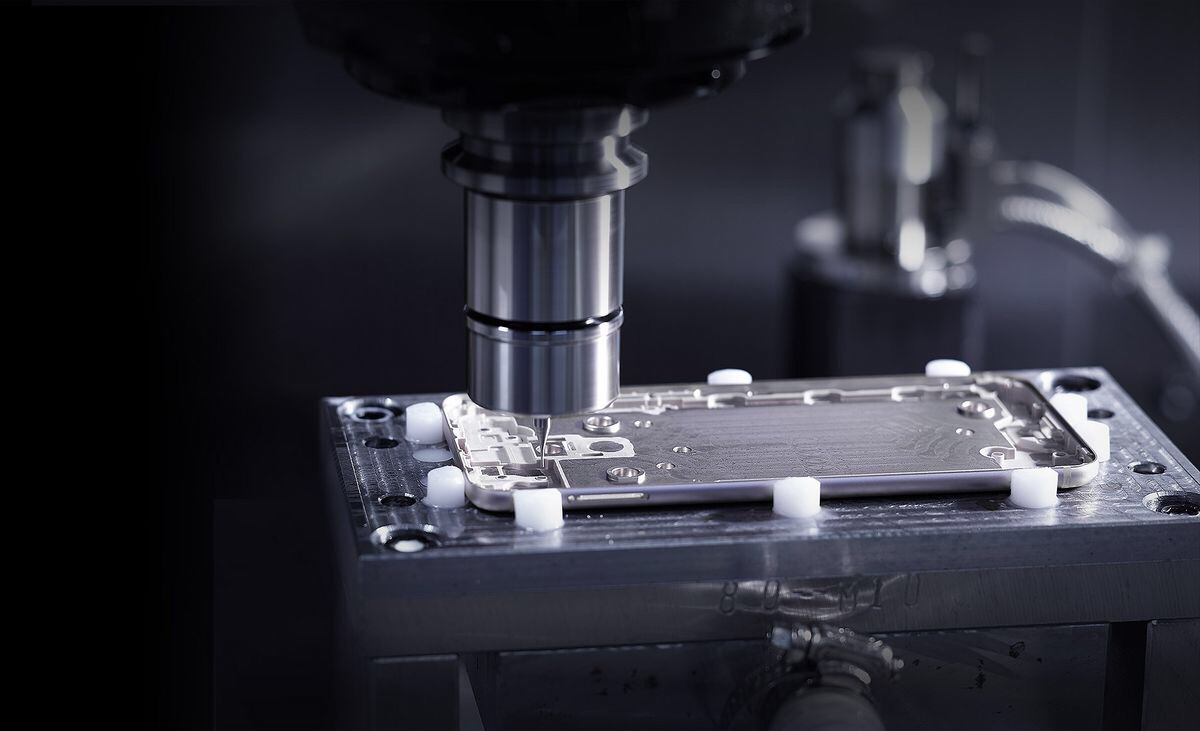
Milling is a machining process that involves removing material from a workpiece using rotating cutting tools. These tools have multiple cutting edges that engage the material, allowing for precise shaping and dimensioning. Milling can be performed on various materials, including metals, plastics, and wood.
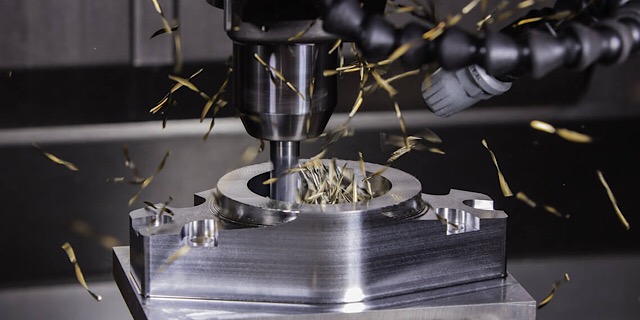
Types of Milling:
- Vertical Milling: The spindle is oriented vertically, allowing for the cutting tool to move up and down.
- Horizontal Milling: The spindle is oriented horizontally, and the cutting tool moves parallel to the workpiece.
- CNC Milling: Computer Numerical Control (CNC) milling utilizes computerized controls to automate the milling process, providing high precision and repeatability.
Applications:
- Face Milling: Producing flat surfaces and contours on a workpiece.
- End Milling: Creating complex shapes, slots, and pockets.
- Milling of Keyways: Making grooves or slots for keys in mechanical assemblies.
What is Grinding?
Grinding is a finishing process that uses an abrasive wheel or belt to remove material from a workpiece. Unlike milling, which uses cutting tools, grinding relies on the hardness of abrasive materials to achieve a smooth surface finish and precise dimensions. Grinding is often used as a secondary process after milling or turning to refine the surface quality of a part.

Types of Grinding:
- Surface Grinding: Involves grinding a flat surface using a horizontal or vertical spindle.
- Cylindrical Grinding: Used for external and internal cylindrical surfaces, where the workpiece is rotated while being ground.
- Centerless Grinding: A method where the workpiece is held between two wheels without the need for a spindle.
Applications:
- Finishing Operations: Achieving tight tolerances and smooth surface finishes.
- Sharpening Tools: Resharpening cutting tools and blades.
- Polishing and Deburring: Removing sharp edges and improving surface aesthetics.
Key Differences Between Milling and Grinding
| Criteria | Milling | Grinding |
|---|---|---|
| Cutting Mechanism | Uses rotating cutting tools with multiple edges | Uses abrasive wheels or belts |
| Material Removal | Primarily removes material through cutting | Removes material through abrasion |
| Surface Finish | Produces a rough to smooth finish depending on the tool and parameters | Achieves a fine finish, often smoother than milling |
| Speed | Generally faster due to the cutting action | Slower, as it relies on the hardness of abrasives |
| Applications | Suitable for creating complex shapes and dimensions | Ideal for finishing operations and achieving tight tolerances |
Advantages of Milling
- Versatility: Capable of machining a wide variety of shapes and sizes.
- Speed: Generally faster than grinding, allowing for efficient material removal.
- Precision: High levels of precision can be achieved, especially with CNC milling.
- Complex Features: Able to create complex geometries, slots, and contours.
Advantages of Grinding
- Surface Finish: Provides superior surface finishes and can achieve tight tolerances.
- Material Hardness: Effective for hard materials that are difficult to machine using milling.
- Tool Life: Abrasive tools can often last longer than traditional cutting tools.
- Precision: Excellent for achieving very precise dimensions and finishing work.
Conclusion
Milling and grinding are both essential machining processes in manufacturing, each with its unique advantages and applications. Milling is primarily used for material removal and creating complex shapes, while grinding excels in finishing and achieving high surface quality. Understanding the differences between these processes enables manufacturers to select the most appropriate method for their specific needs, ensuring optimal performance and quality in their products.
By leveraging the strengths of both milling and grinding, manufacturers can enhance their production capabilities and achieve superior results in their machining operations.
©2024 COPYRIGHT © 2024 XIAMEN YANGSEN NC EQUIPMENT JOINT-STOCK CO.,LTD Powered by www.300.cn
SAF Coolest v1.3 设置面板 XWPSX-ZZFI-UDAAE-ZSE
无数据提示
Sorry, There Is Currently No Content In The Current Column!
You Can View Other Sections Or Go Back HOME